Monitoring Production AI: What to Track and Why
Essential monitoring strategies for production AI systems. Learn what metrics matter, how to set alerts, and when to intervene.
Alistair Williams19 March 20267 min read
Essential monitoring strategies for production AI systems. Learn what metrics matter, how to set alerts, and when to intervene.
Deploying an AI system is not the finish line. It is the starting line. The real work begins when your system is live, processing actual business data, and making decisions that affect your customers and your bottom line.
The uncomfortable truth is that AI systems degrade silently. Unlike traditional software that either works or throws an error, an AI system can continue running perfectly while its output quality gradually deteriorates. The model still responds. The API still returns 200 OK. But the answers are getting worse, and nobody notices until a client complains or a quarterly review reveals the numbers do not add up.
Here is what we monitor across every production AI system we deploy, and why each metric matters.
Most teams start monitoring with accuracy, and that is a reasonable instinct. But accuracy alone is dangerously incomplete.
Confidence distribution tells you far more than aggregate accuracy. Track the distribution of confidence scores over time. A healthy model has a bimodal distribution: most predictions are high confidence (the model is certain) or low confidence (the model correctly identifies uncertainty). When the distribution flattens or shifts towards the middle, the model is becoming less decisive. Something has changed in the input data.
We monitor this weekly for a document processing system that classifies incoming invoices. When we noticed the confidence distribution shifting leftward over three weeks, we investigated and found that a major supplier had changed their invoice format. The model was still classifying correctly 89% of the time, but its uncertainty had doubled. Without the confidence monitoring, we would not have caught the drift until accuracy dropped to a noticeable level.
Latency percentiles matter more than averages. Your AI system might average 200ms response time, but if the 99th percentile is 3 seconds, one in a hundred users is having a terrible experience. For customer-facing AI, we track P50, P95, and P99 latency. For batch processing systems, we track per-item processing time and total pipeline duration.
Output distribution monitoring checks whether the AI's outputs still match expected patterns. If your classification system normally assigns 40% of items to Category A and 30% to Category B, and suddenly Category A drops to 15%, something is wrong. This could be a genuine shift in your data, or it could be a model issue. Either way, you want to know about it.
The most common cause of AI system degradation is not model failure. It is data quality degradation. The API that feeds your model changes its response format. A database migration introduces null values where there were none before. A manual process that upstream relies on gets skipped for a week.
We implement data quality checks at every ingestion point:
Schema validation catches structural changes. If an expected field is missing or changes type, the system raises an alert before the bad data reaches the model. This sounds basic, but we have seen production systems fail because an upstream API started returning a string where a number was expected, and the model silently produced garbage.
Volume monitoring tracks whether you are receiving the expected amount of data. A sudden drop in incoming records usually means an integration has broken. A sudden spike might indicate duplicate data. We set upper and lower bounds based on historical patterns and alert on deviations.
Freshness checks ensure data is current. If your AI system makes recommendations based on stock levels, and the stock data has not updated in six hours, the recommendations are based on stale information. We check the timestamp of the most recent record for every data source and alert if it exceeds a threshold.
For our Mind Build deployments, data quality monitoring is built into every pipeline from day one. It is not an afterthought.
Technical metrics tell you whether the system is healthy. Business metrics tell you whether it is useful.
For every AI system we deploy, we define two to three business KPIs that the system is expected to influence. These are tracked alongside the technical metrics on the same dashboard. This creates a direct line of sight between system health and business impact.
Examples from recent deployments:
The business metrics also serve as the ultimate validation. You can have perfect model accuracy and still deliver no business value if the system is solving the wrong problem. Tracking business outcomes keeps everyone honest.
Monitoring is useless without effective alerting, and alerting is counterproductive if it generates too much noise. Alert fatigue is real. When your team gets fifty alerts a day, they start ignoring all of them.
We use a three-tier alerting structure:
Tier 1 (Immediate, pages on-call): System is down, data pipeline has stopped, or a critical business process is blocked. These are rare and demand immediate attention. Examples: API returning 500 errors for more than 5 minutes, no data received for 2 hours when the source runs hourly.
Tier 2 (Urgent, notification to Slack/Teams): Performance has degraded significantly but the system is still functioning. Examples: latency P95 exceeds 2x normal, model confidence distribution has shifted more than 20%, data volume is 50% below expected.
Tier 3 (Informational, daily digest): Trends that need attention but not urgently. Examples: gradual increase in low-confidence predictions over the past week, minor increase in processing time, one data source freshness approaching threshold.
The key is tuning thresholds based on actual production behaviour, not theoretical assumptions. We typically run a new system for two weeks with alerting in observation mode, collecting data on what would have triggered, before activating the alerts. This prevents the initial flood of false positives that kills trust in the alerting system.
For regulated industries or sensitive applications, you need to know not just what the AI decided, but why. This means logging the inputs, the model version, the confidence score, and the output for every decision.
We implement structured logging that captures the complete decision context. Every AI decision gets a unique trace ID that links the input data, the processing steps, and the output together. When someone asks "why did the system classify this invoice as high risk?", we can reconstruct the entire decision chain.
This is not just about compliance. It is about debugging. When something goes wrong in production, the ability to replay a specific decision with the exact inputs is invaluable. We have resolved issues in minutes that would have taken days without proper logging.
Storage-wise, we retain detailed logs for 90 days and summary metrics indefinitely. The detailed logs are essential for incident investigation. The summary metrics power the long-term trend monitoring that catches gradual degradation.
Monitoring is not a separate project. It is an integral part of every AI deployment. At ArcMind, we build the monitoring layer alongside the AI system, not after it. Every Mind Build engagement includes performance dashboards and alerting as standard deliverables.
If you have AI systems in production without proper monitoring, or you are planning a deployment and want to get the observability right from the start, let us talk. The cost of monitoring is a fraction of the cost of a production failure that goes undetected for weeks.

Alistair Williams
Founder & Lead AI Consultant
Built a 100+ skill production AI system for his own agency. Now builds yours.
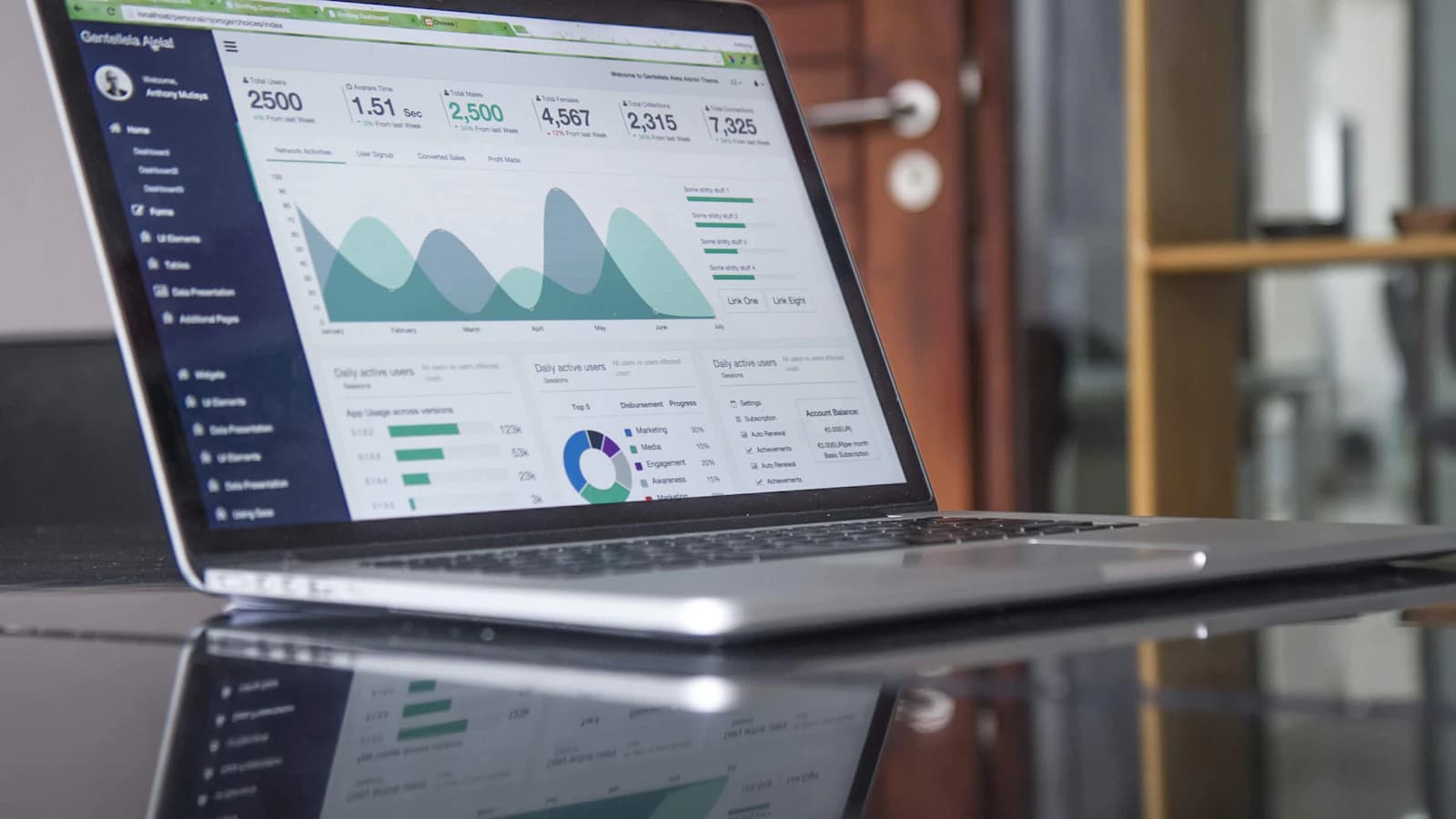
How to scale AI from a successful pilot to multiple production systems across your business without the wheels falling off.
Practical API integration patterns for connecting AI systems to your existing business tools. Lessons from production deployments.

Production AI needs production data infrastructure. A practitioner's guide to building data pipelines that are reliable, observable, and maintainable.
Book a free 30-minute discovery call. We'll discuss your business, identify quick wins, and outline how AI can drive real ROI.
Get Started